
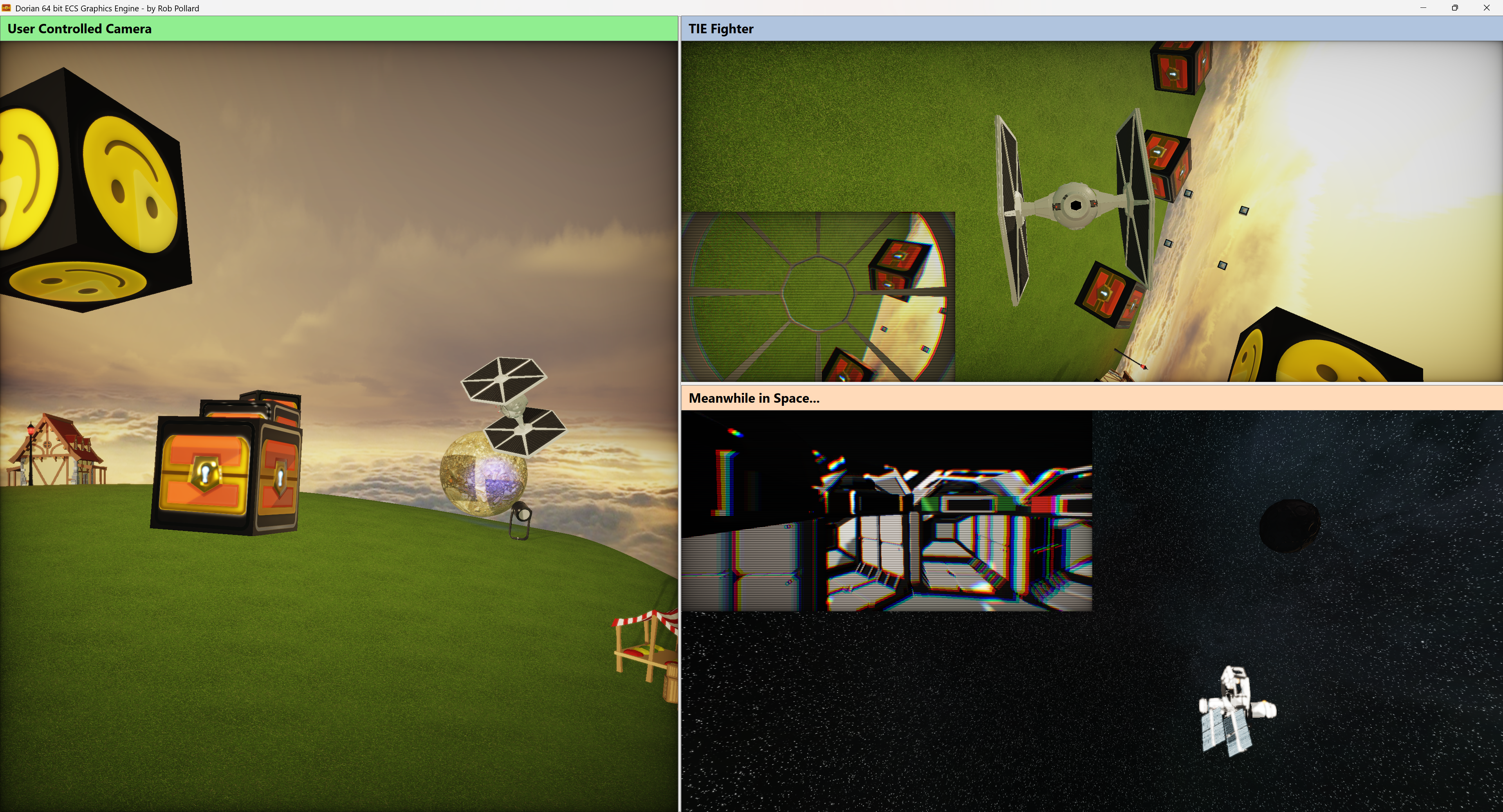
After a significant amount of work, Dorian now supports Image-Based Lighting (IBL).
This is an important milestone because it dramatically improves how objects integrate with their surroundings, bringing Dorian’s rendering closer to the visual standards expected from modern graphics engines.
What is IBL, and why do we need it?
Traditional rendering engines calculate illumination using only the light sources present in a scene. While this approach works, it ignores an important aspect of real-world lighting: light scattering.
Light is constantly bouncing off surfaces around us. The ground reflects light upwards, the sky casts ambient light downwards, and nearby objects subtly influence the colour and intensity of the light reaching other surfaces.
In the scene shown at the top of the post, both the sky and the ground contribute secondary illumination to everything in view.
Without these indirect lighting effects, objects often appear disconnected from their environment. They may be correctly lit, but they do not quite look as though they belong in the scene.
The most accurate way to simulate these interactions is through ray tracing. However, ray tracing is computationally expensive and typically requires high-end graphics hardware to run smoothly.
IBL approaches the problem from a different angle.
In simple terms, it cheats.
How IBL works
IBL captures a low-frequency, 360-degree sample of the surrounding environment and uses that information to approximate indirect lighting.
Some systems sample only the sky. Dorian samples both the sky and the ground, allowing it to capture a broader range of environmental lighting information.
More advanced rendering systems go a step further and often use light probes, which can sample lighting from anywhere within a scene. Dorian does not currently support light probes – that’s a future story on the roadmap.

At runtime, Dorian tracks the orientation of the environment relative to the camera and uses the irradiance map to influence the lighting calculations applied to objects in the scene.
The result is subtle but important: objects begin to inherit colour and lighting cues from their surroundings.
The effect in practice
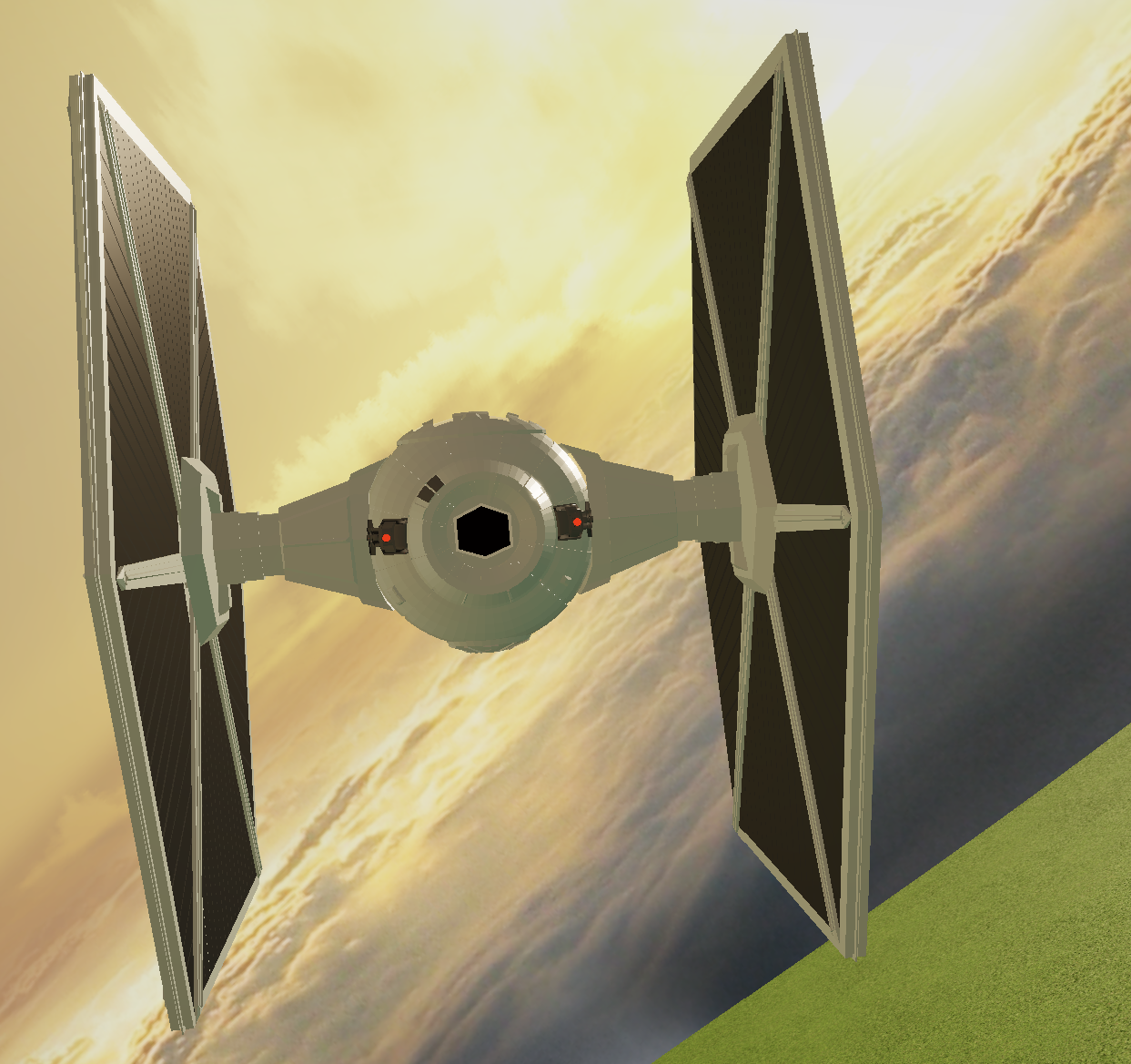
The underside of the craft picks up a slight green tint from light reflected by the ground, while other areas receive warmer tones from atmospheric scattering and the sky.
Normally these colour shifts are extremely subtle, but they help convince the eye that the object genuinely exists within the scene rather than being placed on top of it.
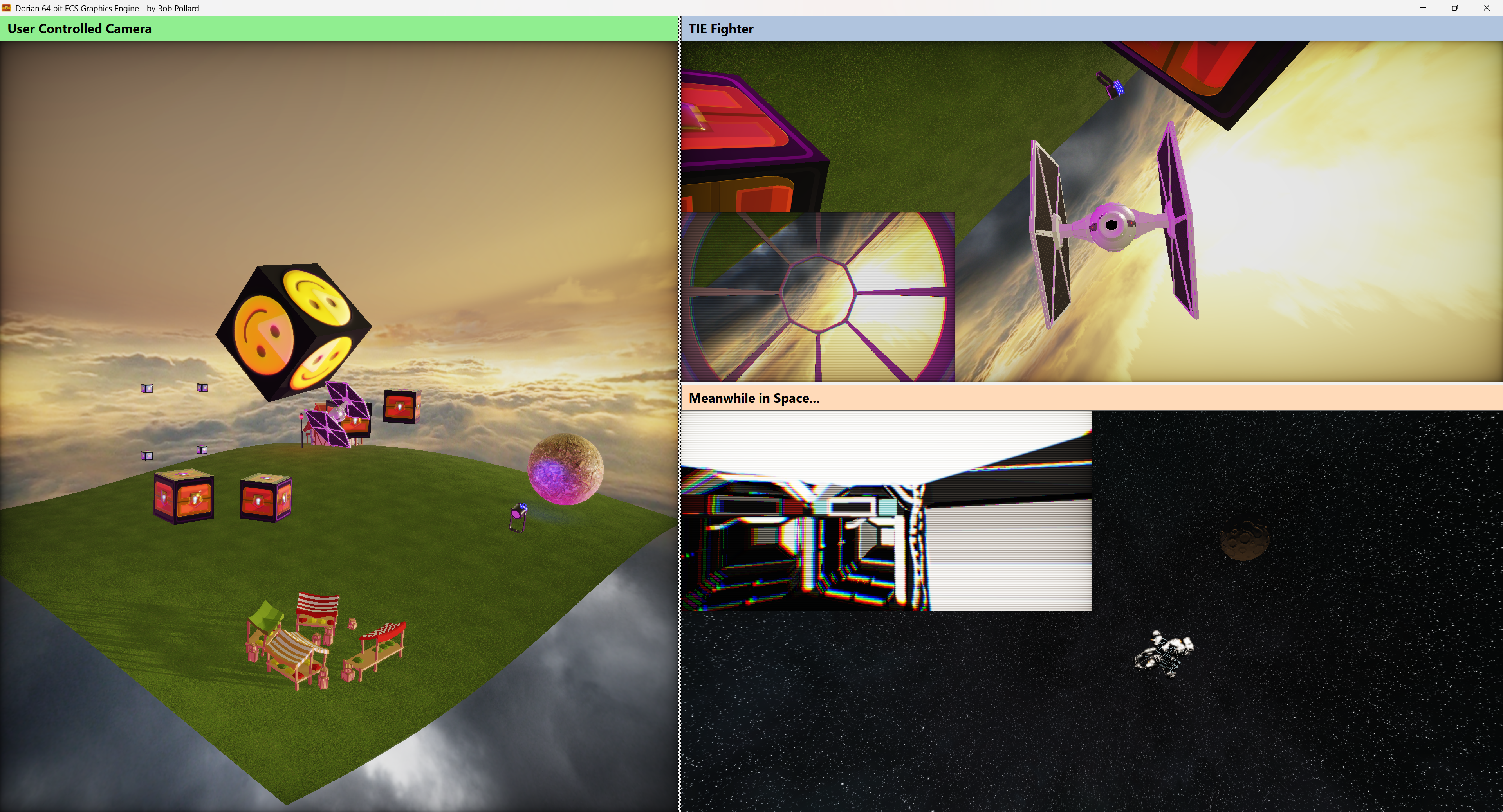
However, this effect is a lot more pronounced on the TIE Fighter because its light grey hull readily reveals changes in environmental lighting.
In the image below, a magenta false-colour visualisation highlights where ground-scattered light is contributing to the final image.
Reflections benefit too
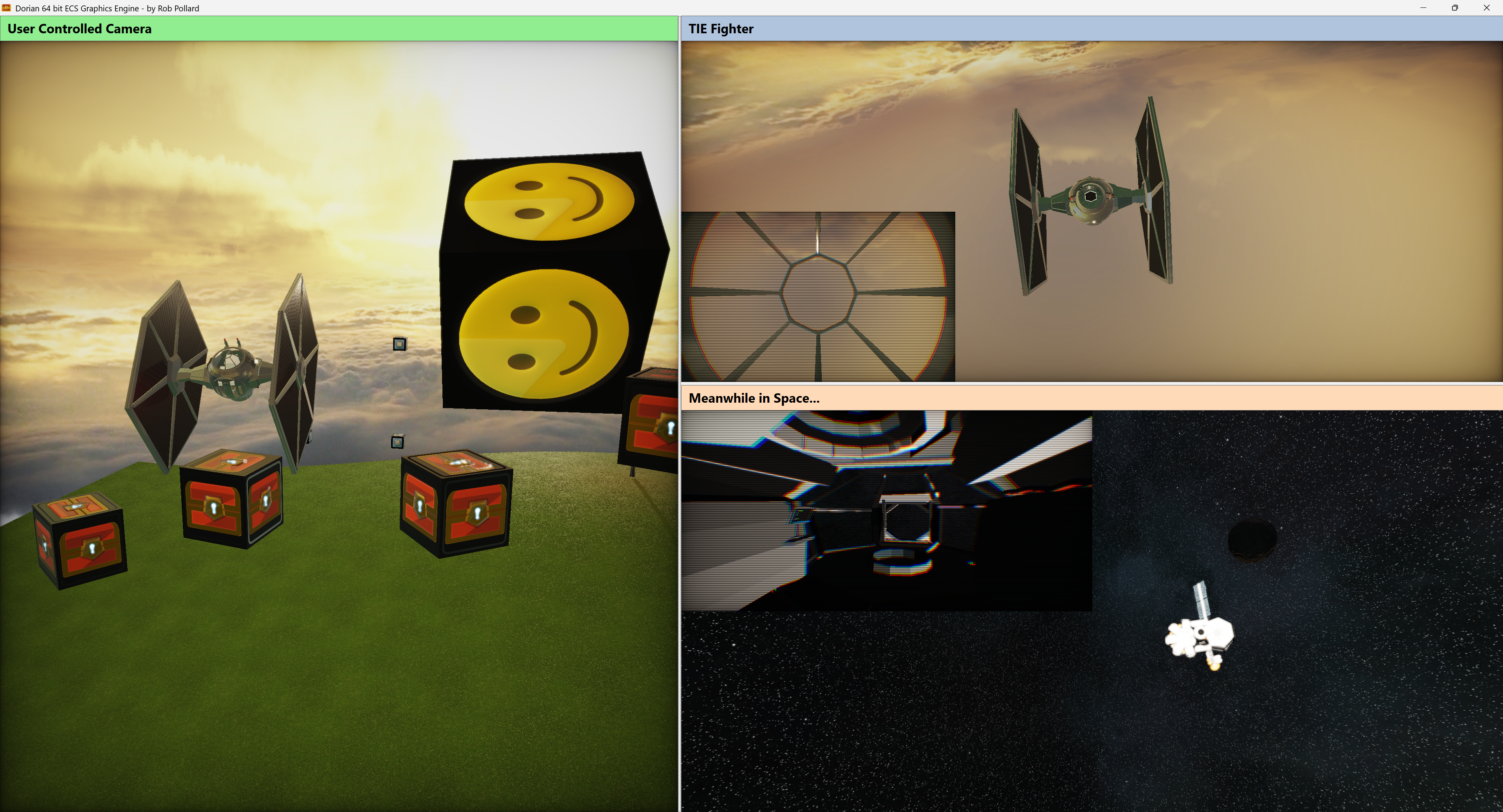
IBL also improves the appearance of reflective materials.
The chrome TIE Fighter below demonstrates how environmental lighting contributes to more convincing shading and surface definition, even without the use of light probes.
Looking ahead
With the addition of IBL, Dorian’s lighting system is continuing to mature towards the capabilities expected from a modern professional rendering engine.
Combined with its existing support for tone mapping, HDR-to-SDR conversion, and post-processing effects, the renderer is now producing significantly more convincing images than it was only a few months ago.
There is still plenty of work ahead, but the investment is beginning to pay dividends.
That’s it for today’s fly-by post.
Have Fun!
RobP


Leave a Reply